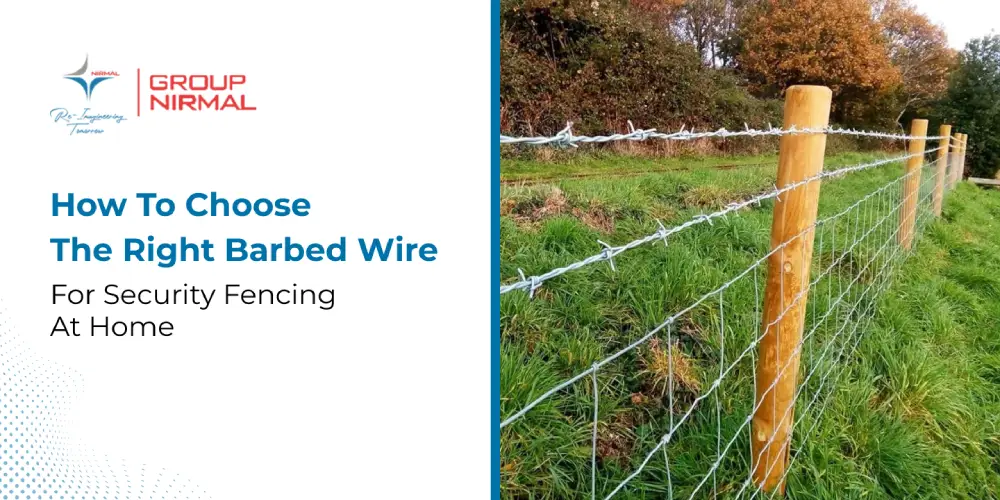
How to Choose the Right Barbed Wire for Security Fencing at Home
A secure home fence isn’t just about marking boundaries — it’s about peace of mind. When you consider security, durability, cost, and long-term resilience, Barbed Wire Fencing often emerges as a top contender for protecting your property. In this article, we will explore how to pick the right barbed wire fencing for your home needs. We will examine materials, strengths, environmental factors, installation, maintenance, and cost vs. security balance — giving you a comprehensive guide to make an informed decision. Barbed wire fencing consists of steel wires twisted together, with sharp metal points (barbs) spaced at intervals along the wire. These protruding barbs act as a deterrent, discouraging any attempt to climb or breach the fence. Over decades, barbed wire has proven to be a durable and cost-effective solution for securing perimeters — whether around farms, industrial sites, or residential homes. Its simplicity belies its effectiveness: a well-installed barbed wire fence can deter intruders long before they attempt entry. Moreover, in many parts of the world, including India, reputable manufacturers produce barbed wire that adheres to standards for strength, galvanization, and quality. This ensures that the fencing will not only meet security goals but also stand the test of time. When you own a home, protecting the boundary matters — not just for privacy, but for safety. Barbed wire fencing serves as a physical barrier that does more than just mark property lines. It sends a clear deterrent signal: “This property is defended.” For potential intruders or trespassers, the risk of injury or detection often makes them think twice. Beyond deterrence, barbed wire fencing also offers advantages like ease of installation, minimal maintenance (if properly galvanized), and flexibility — you can install it atop walls, along boundary lines, or over existing fences to reinforce security. For many homeowners, these combined benefits make barbed wire fencing an attractive choice. Not all barbed wire fences are created equal. There are several types, differing by material, coating, strength, and intended application. Broadly speaking, you might encounter: Simple galvanized steel wire (hot-dip galvanized) PVC-coated barbed wire (galvanized core with a protective plastic layer) High-tensile steel wire for stronger fences Alloy-coated wires (e.g., zinc-aluminium coated) for improved corrosion resistance Specialty wires with varied barb designs or multiple strands Each variation serves a different purpose. For instance, galvanized steel suffices for basic boundary marking, while high-tensile or alloy-coated wires are better suited for high-security or harsh environmental conditions. Selecting the right material and coating is paramount for longevity and performance. Ideally, barbed wire should be made of quality steel rods and treated to resist rust and corrosion. Hot-dip galvanization is common, where the steel is dipped in molten zinc. This zinc layer creates a protective barrier against moisture and oxidation, thereby extending the life of the wire. In fact, many reputable manufacturers ensure their barbed wires conform to standards such as IS 278. In damp or coastal climates — or if the fence will face heavy rainfall — a galvanized coating alone may not suffice over decades. In those cases, PVC-coated barbed wire is a wise choice: the plastic coating shields the metal core from moisture and environmental damage. Alternatively, zinc-aluminium alloy coatings (often referred to as Galfan or similar) provide enhanced corrosion resistance and longer life spans, albeit at a higher cost. Choosing the right coating means balancing cost against longevity and maintenance needs. For a home fence you wish to last 10–20 years with minimum upkeep, galvanized with PVC or alloy-coated wire tends to be a prudent investment. The strength and durability of barbed wire fencing depend heavily on the gauge (thickness) of the wire and the tensile strength of the material. A thicker wire resists cutting or bending better, and wire with high tensile strength withstands tension without sagging or breaking — especially important if the fence spans long distances or is under stress (e.g., wind, pressure). For example, standard barbed wire comes in diameters ranging between approximately 1.80 mm and 2.50 mm, at least for many commercial-grade wires. Tensile strength in such wires often ranges between 300 and 550 MPa, which provides a good balance of flexibility and strength for residential fencing. If your home fence needs heavy-duty protection — perhaps over a long perimeter, or near wooded areas — opting for slightly thicker, higher-tensile wire helps ensure the fence remains taut, robust, and less prone to sagging or breakage. The effectiveness of barbed wire fencing doesn’t come solely from the wire — it also depends on the design of the barbs and how they are spaced. Sharp, well-formed barbs are more likely to deter intruders, whereas dull, poorly made barbs lose much of their deterrent value. Similarly, the spacing of those barbs along the wire affects how difficult and risky it is to climb or breach the fence. For many standard wires, barb spacing may vary between roughly 3 to 6 inches. Closer spacing means more frequent deterrents — which generally increases security but also increases cost. Meanwhile, a multi-point barb (e.g., four-point barbs) tends to be more effective than simple two-point ones at discouraging tampering or forced entry. A carefully considered barb design and spacing can make a tangible difference in how secure your fence truly is. Before selecting barbed wire fencing, consider the climate and environmental conditions around your property. In humid, rainy, or coastal regions, corrosion and rust pose serious threats to the longevity of steel wire. In such scenarios, plain galvanized wire may degrade more quickly than expected. Hence, PVC-coated barbed wire or zinc-aluminium alloy-coated wire can be far better suited — the extra protection helps resist weathering, moisture, and environmental wear. On the other hand, in dry inland areas with minimal rainfall, simple hot-dip galvanized wire may suffice and provide a cost-effective, durable solution. Moreover, seasonal changes (hot summers, monsoon rains, cold winters) also matter — a coated or alloy-protected wire can endure these cycles better, reducing upkeep over time. Even the best quality barbed wire fencing will fall short if installed poorly or left unmaintained. Proper installation involves secure posts (concrete or strong metal), adequate tensioning of wires, regular spacing, and stable anchoring — all of which ensure that the fence remains upright and effective over time. Maintenance is equally important. Periodic inspections for rust, loose wires, sagging, or damaged sections help catch problems early. In corrosive environments, minor rust spots should be treated or coated, and any damaged coils replaced promptly. Also, ensuring tension remains optimal — wires should not sag or droop — is key. A taut fencing line increases security and makes tampering more difficult. With decent maintenance, a well-installed barbed wire fence can last well beyond a decade. Here is a comparison of common types of barbed wire fencing including standard galvanized, PVC-coated, and alloy-coated variants: When you set out to get barbed wire fencing, budget is often a major concern. Naturally, cheaper galvanized wire costs less upfront. However, if you aim for long-term security and minimal maintenance — especially in challenging weather conditions — investing in coated or alloy-coated wire may pay off over time. For small homes or modest boundary walls, basic galvanized wire can serve well enough. But if your property is large, located in a humid or coastal area, or if you anticipate long-term usage with minimal maintenance, allocating more budget to PVC-coated or alloy-coated wire will likely yield better durability and reliability. Therefore, the decision should not rest solely on cost, but rather on the right balance between your security needs, environmental conditions, maintenance willingness, and long-term plans. While barbed wire fencing can be an excellent security measure, it also carries responsibilities. In some urban or suburban areas, regulations may restrict the use of barbed wire — especially if fences are visible or adjacent to public spaces. It’s wise to check local laws, municipal building codes, or homeowners’ association regulations before installation. Additionally, barbed wire poses safety risks for humans and animals alike. Sharp barbs can cause serious injury if someone tries to climb the fence or accidental contact occurs. For households with children or pets, extra caution is needed. Proper signage or protective measures (e.g., mesh covers, warning signs) can help mitigate these risks. From a liability perspective, property owners should also consider the consequences of accidental harm — particularly if the boundary is accessible to outsiders. Balancing security with safety and compliance is critical. Barbed wire fencing is not the only option for securing a home. Alternatives include chain-link fences, wrought-iron railings, solid walls, concrete walls, and wooden fences — each with its own pros and cons. Barbed wire fencing is ideal when you need a cost-effective security barrier; you want quick installation; you prefer minimal visual obstruction, or you need extra deterrence atop existing walls. But if aesthetics, child safety, pet safety, or privacy matter more — or you live in a neighborhood with strict building codes or safety regulations — alternatives like chain-link or solid walls may be more appropriate. Chain-link fences, for instance, provide visibility and moderate security without the sharp danger of barbs. Thus, before settling on barbed wire fencing, weigh your priorities: security vs safety, deterrence vs aesthetics, cost vs compliance. Quality of material matters — and that depends largely on the supplier. When choosing a manufacturer or supplier of barbed wire, look for: Compliance with recognized standards (e.g., galvanization standards, tensile strength ratings Transparent specifications: wire diameter, tensile strength, barb spacing, coating type — avoid unclear or vague descriptions. Proper packaging (e.g. coils of specified weight), quality control at the manufacturing stage, and after-sales support if possible. Reputation and experience: suppliers known for consistent quality and reliability tend to provide better long-term products. Whether you choose a simple galvanized wire or a premium alloy-coated one, a reliable supplier ensures the fencing performs as expected. Before purchasing barbed wire fencing, go through this checklist: Define the purpose: security, boundary marking, livestock, privacy? Measure the total length and height of the fence needed. Determine the environment: humid, coastal, inland — impact on corrosion. Choose wire type: galvanized, PVC-coated, alloy-coated, or high-tensile. Check wire specifications: diameter, tensile strength, barb spacing, barb design. Ensure posts and installation materials are appropriate for the chosen wire gauge and expected load. Budget realistically — include the cost of wire, posts, installation, and maintenance. Consider safety and legal compliance in your locality — check regulations. Plan for maintenance: periodic inspections, rust treatment, and tensioning. Select a reputable supplier with clear specs and quality assurance. This checklist helps you make an informed, structured decision rather than rushing into a purchase that may fail to meet your needs. Barbed wire fencing remains one of the most effective, economical, and flexible options for home security and boundary protection. But its true effectiveness depends heavily on choosing the right type of wire, understanding environmental demands, ensuring proper installation, and maintaining the fence over time. By carefully weighing material quality, coatings, tensile strength, barb design, climate conditions, safety issues, and cost — and by selecting a trusted supplier — you can ensure that your Barbed Wire Fencing investment offers long-lasting security and peace of mind. Take the time now to assess your needs, study your environment, and plan accordingly. The right choice today will safeguard your home for years to come.Introduction to Barbed Wire Fencing
Why Barbed Wire Fencing Matters for Home Security
Understanding Types of Barbed Wire
Material and Coating: What to Look For
Wire Gauge, Diameter, and Tensile Strength
Barb Design and Barb Spacing
Environmental and Climatic Considerations
Installation and Maintenance for Longevity
Comparing Barbed Wire Fencing Options: Pros and Cons
Cost vs Security: Balancing Budget and Safety
Legal and Safety Considerations
When to Choose Barbed Wire Fencing vs Alternative Fencing Solutions
Tips for Choosing the Right Supplier / Manufacturer
Homeowner Checklist: What to Decide Before Buying
Conclusion: Making an Informed Decision on Barbed Wire Fencing


