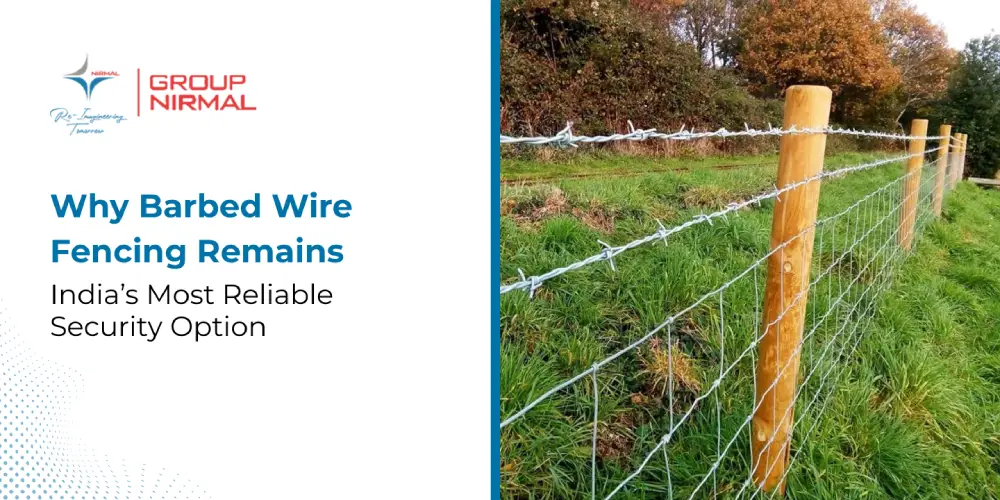
Why Barbed Wire Fencing Remains India’s Most Reliable Security Option
Introduction to Barbed Wire Fencing
Definition and Historical Background
Barbed wire fencing consists of steel wires twisted together, with sharp barbs spaced along the length. Invented in the late 19th century, it transformed property protection by providing a simple and effective method to deter unauthorized access. Its design combines durability with ease of installation, making it widely applicable even today.
Its Role in Modern Security
This fencing solution continues to be essential across India. Beyond agricultural use, it is employed in industrial premises, government facilities, and border security, proving its versatility and long-lasting effectiveness.
Types of Barbed Wire Fencing
Single-Strand Wire
A single core wire with attached barbs, this type is simple to install and suitable for small farms or temporary enclosures.
Double-Strand Wire
With two twisted wires, this variant provides extra strength and deterrence. It is ideal for industrial sites or high-security boundaries.
Razor Wire vs. Barbed Wire
Razor wire features sharp-edged strips for extreme deterrence, but barbed wire remains more economical for general perimeter protection while still providing effective security.
Materials Used in This Fencing
Galvanized Steel
Galvanized steel is the most commonly used material, offering excellent resistance against rust and maintaining structural integrity in outdoor conditions.
PVC-Coated Wire
A polymer coating adds a protective layer, enhancing durability against chemicals, abrasion, and weathering.
Zinc-Aluminium Alloy Variants
These high-performance coatings provide superior corrosion resistance, particularly beneficial in humid or coastal regions.
Key Benefits of Using This Security Wire
High Deterrence
The sharp barbs act as both a physical and psychological barrier, effectively discouraging intrusion.
Cost-Effectiveness
Installation and material costs are lower than alternative fencing solutions, making it ideal for extensive perimeters.
Low Maintenance
Durable coatings reduce corrosion and wear, ensuring long-lasting performance with minimal upkeep.
Applications of Barbed Wire Fencing
Agricultural Protection
Farmers use the Barbed Wire fencing material to prevent livestock from escaping and protect crops, offering reliable containment over large areas.
Industrial and Commercial Premises
Factories, warehouses, and construction sites rely on it to secure assets and restrict unauthorized access.
Border and Government Security
High-security zones, including borders and military facilities, benefit from its robust deterrent properties.
Durability and Weather Resistance
Resistance to Rust and Corrosion
Galvanized or alloy-coated wires withstand environmental exposure without losing strength.
Performance in Extreme Conditions
The fencing maintains integrity in heat, rain, wind, and humidity, providing continuous protection.
Long Lifespan
Properly installed fencing can remain effective for decades, combining strength and low maintenance.
Installation Guidelines
Choosing Proper Posts
Steel or treated wooden posts provide a stable base, ensuring consistent wire tension.
Spacing and Tension
Correct strand spacing and uniform tension improve security and prevent sagging.
Safety Precautions
Gloves, eye protection, and careful handling are necessary during setup to avoid injuries.
Cost Analysis and ROI
Initial Investment vs. Benefits
While initial costs are modest, long-term durability and minimal maintenance result in excellent returns.
Comparison with Alternative Fencing
Compared to chain link or concrete walls, this fencing offers a flexible, low-cost solution without compromising protection.
Future Trends in India
Advanced Coatings
Emerging coatings, such as zinc-aluminium alloys and polymer layers, enhance corrosion resistance and reduce environmental impact.
Integration with Smart Security
Modern installations increasingly combine the wire with sensors, alarms, and CCTV systems, creating intelligent perimeter security.


